
Our Research
Looking at social dynamics and gender from a new angle
Original research report:
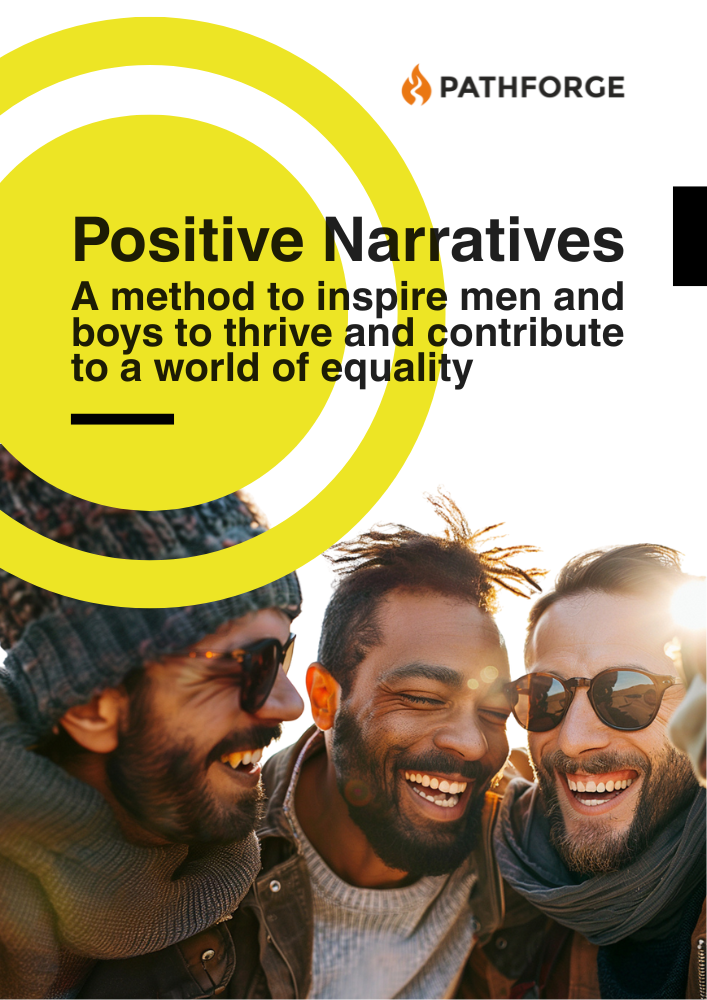
Positive Narratives
A method to inspire men and boys to thrive and contribute to a world of equality
Amongst the pressing need to resist the backlash, this report presents an evidence-based framework for offering men and boys a better way and inspiring gender-transformative work through narrative interventions. It is based on and promotes the work many organisations already do, aiming to systematise and popularise it, and invite you to collaborate and expand it further.
The report promotes designing affirmative, constructive, and solution-focused narratives which uphold important values while helping men and boys find their place in an equitable and fair society. Narratives that resonate with their need for community, meaning, and purpose, and offer an attractive alternative to the regressive voices of the manosphere. Narratives that can counter the harmful backlash stories.
It will help you frame your messages and interventions in ways that can inspire men and boys to empower themselves towards revising gender norms and embracing healthy, caring and equitable masculinities. Eight evidence-based principles will help you orient your work towards guiding as many men and boys as possible to adopt as many values associated with such masculinities as possible, as quickly as possible. Three example narratives offer you application ideas spanning diverse media and intervention types, clearly defining target audiences, intended impact, and next steps.
This is a living project and a continuous work in progress. We expect to release regular updates and to expand our library of narratives. We invite you to collaborate by offering your feedback, sharing the narratives you have been using, and helping us contextualise our work to the various social, cultural, religious and other settings.
Composed in collaboration with the MenEngage Europe Positive Narratives Working Group
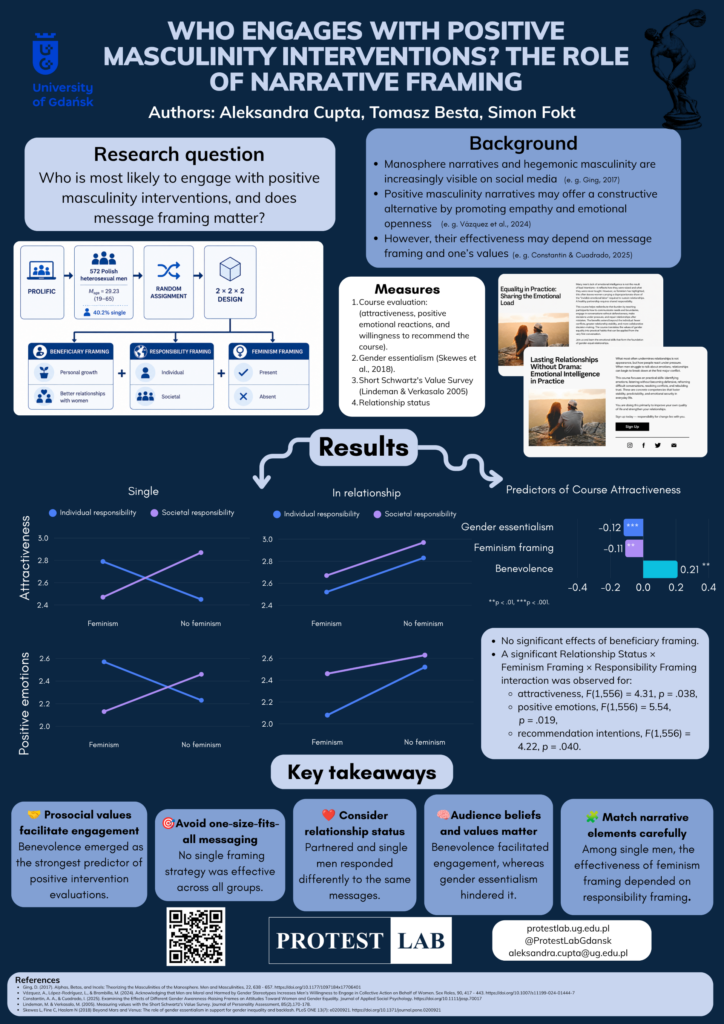
Who engages with positive masculinity interventions? The role of narrative framing
This pilot study explores the narrative framings which inspire men to engage with content promoting development of emotional intelligence. We look specifically at how men engage with messages presented from a more male- or female-centred point of view, emphasising individual or societal responsibility, and explicitly mentioning feminism or not. We further check the results against participants’ relationship status, belief in gender essentialism, and benevolence score.
Research done in collaboration with Aleksandra Cupta and Prof. Tomasz Besta (University of Gdańsk, Poland)

Should we talk about ‘Toxicity’?
The notion of ‘toxic masculinity’ has been used in ways which are neither fair nor helpful. But as it is now permanently in our dictionaries, perhaps there is a way to reframe it. I review the two main historical framings discussing their advantages and weaknesses, and construct a synthesis which acknowledges that ‘toxicity’ can and does apply to more than just masculinity, aims to reduce the divisive character of the term, encourages focus on systemic causes and solutions, and supports both action-oriented between-group use and self-improvement-oriented within-group use. A virtue ethical definition can further discourage division and instead promote a focus on systemic causes and solutions.

How (not) to promote DEI in games
Smart cultural insight that protect your game from online backlash.
Over the last years, video games have become deeply politicised, turning into a stage for the culture wars. While few people would disagree that it is important that our games and gaming platforms are not sexist and do not promote misogyny and hate, there is growing resistance to what people perceive as ‘too much wokeness,’ and many DEI initiatives are backfiring.
We investigate the perceptions of this issue within the gaming industry and amongst gamers, with the aim of developing better strategies for promoting equality and diversity which work within existing gaming and gamedev cultures, do not lead to compromising game quality and thus sales, and are less likely to lead to backlash.
Ongoing Research Projects

Subscribe to Our Newsletter
Join our community today!